
Content optimization standards have changed significantly over the years. Optimal keyword density or blog post length is no longer something that can be defined with a general rule — it’s specific to each individual piece of content.
To help your content to rank on page 1 of Google nowadays, you need to take a data driven approach.
Content optimization starts with the purpose of the page and the person reading it. Review what the page answers well, where it falls short and whether it helps someone take the next step. Existing content can contain valuable experience and evidence worth keeping.
Content analysis process
Use the keyword map to establish the intended topic. Review the live search results and competing pages, then examine these parts of your own page:
- Page title
- Meta description
- Content body
- Heading tags
- Within bold or italics
Tools can highlight missing subjects, repetition and structural problems. Their scores are useful prompts for review, rather than a formula for the finished article. Check the facts, examples and sources as well as the wording.
Continuous content improvement
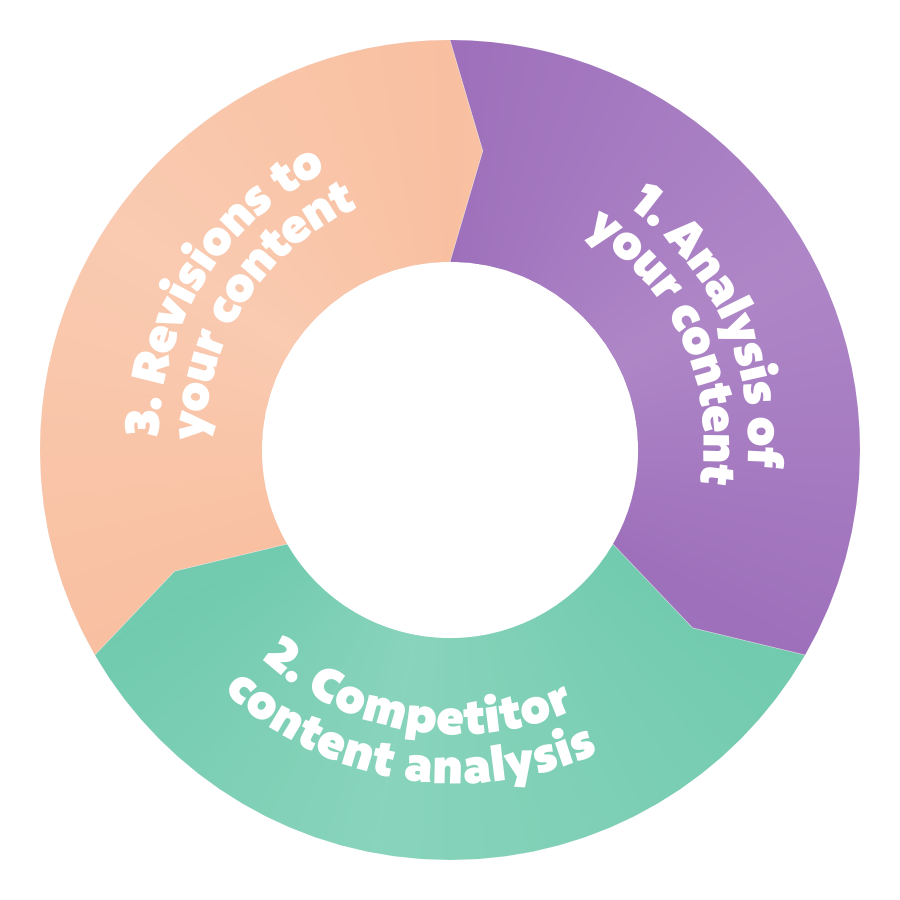
Update outdated information, answer useful questions and remove repetition. Break dense passages into clearer paragraphs or lists, and give headings a useful sequence. Add original examples, images or explanations where they help the reader.
Preserve material that already works. A rewrite does not need to start from a blank page: improve the weak sections and keep the useful evidence, language and intent. Check titles, descriptions and internal links as part of the same pass.
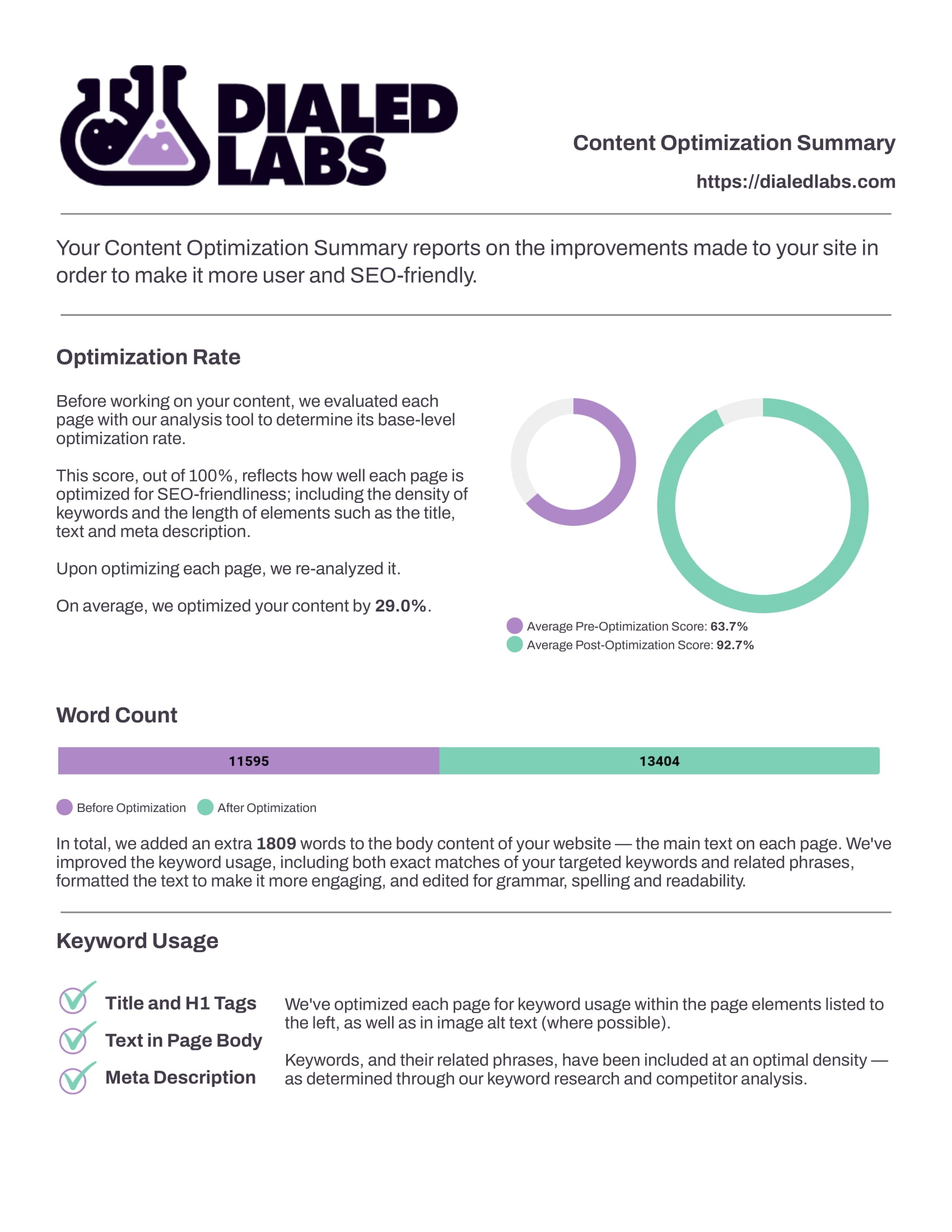
Click the image to download an example report.
Prioritise the work
Choose pages where a better answer can make a meaningful difference: important commercial pages, articles with useful visibility but weak engagement, or resources that have become outdated. Compare the effort with the value of the topic and the quality of what is already there.
Record the changes and publication date, then review performance over a useful period. Look at the search queries, engagement and business outcomes together. Use what you learn to choose the next group of pages.
What to look for in content optimization services
Ask for a clear explanation of how pages are selected, what research informs the edits and who checks accuracy. Agree whether the work includes images, internal links, metadata and implementation. A stronger page is the deliverable; an arbitrary word count or tool score is only part of the process.
Turn the findings into a stronger website
If technical issues are holding your site back, our Technical SEO Audit & Fix service takes the work from diagnosis through implementation. For earned media coverage and editorial backlinks, explore our managed digital PR service.